Ten evidence informed exercises for back, core, hip, and neck health, with plain how to instructions, reps, and the cautions that keep them safe.
Most of the back and neck pain I see in our Canton, Cartersville, and Rome offices is not the result of one dramatic injury. It builds quietly over months and years from the same handful of problems: hips that have lost their range of motion, a deep core that has stopped doing its job, a mid-back that is locked into a slumped position, and a neck that spends ten hours a day drifting forward over a phone or keyboard. The encouraging part is that these are mechanical problems, and mechanical problems respond to movement.
This is not a list of fitness-influencer party tricks. These are the specific exercises I actually teach patients, why each one works, how to do it without making things worse, and who should be careful. The research is clear on the big picture: for ordinary low back pain, staying active and exercising is one of the few things that consistently helps. The World Health Organization, in its low back pain fact sheet, names physical activity and exercise as core, evidence-based parts of management, and it specifically warns against prolonged bed rest. The U.S. National Institute of Neurological Disorders and Stroke says the same thing in its back pain overview: people who keep moving tend to recover faster than those who rest.
Pick four or five of these to start, not all ten. Do them most days of the week. None of them require equipment, and most take under fifteen minutes total. Work in a pain-free or low-pain range; a stretch should feel like a stretch, and a strength exercise should feel like effort, but neither should produce sharp or radiating symptoms. If something reproduces the exact pain that brought you in, back off that movement and let us look at it.
A note on dosing before we start. "Reps" measure repetitions; "sets" are groups of reps with a rest between them. For the core endurance work in this guide I prefer time and repeat counts over heavy reps, because the deep stabilizers are endurance muscles. They respond to being asked to hold steady, not to being pushed to failure.
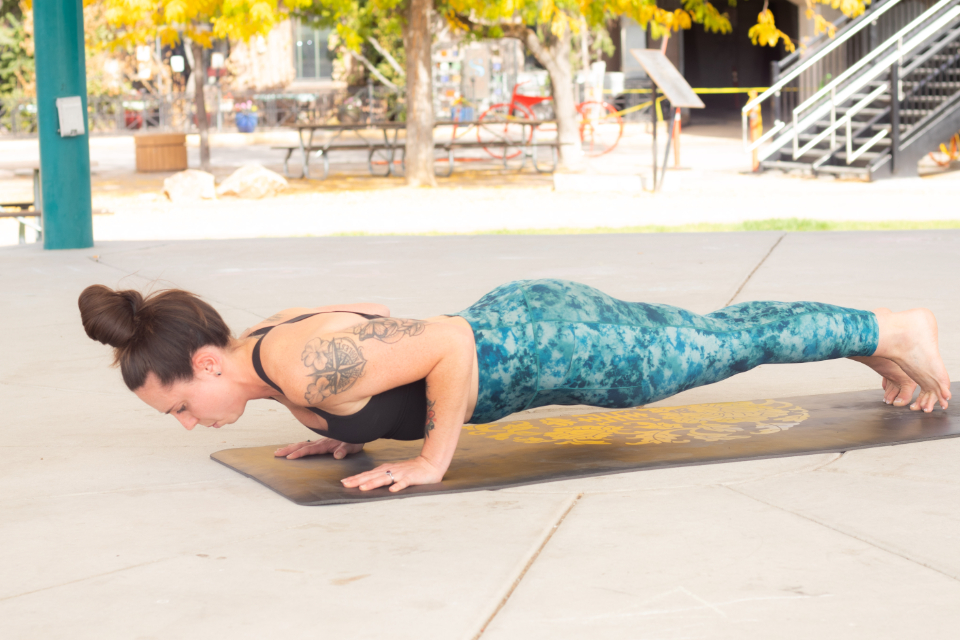
The deep core is not your six-pack. It is the cylinder of muscle around your spine: the transverse abdominis in front and to the sides, the multifidus running between the vertebrae, the diaphragm on top, and the pelvic floor on the bottom. Their job is to create a stiff, stable trunk so the spine does not have to absorb load segment by segment. Research from spine biomechanics, including the widely cited work of Dr. Stuart McGill at the University of Waterloo, points away from sit-ups and crunches and toward endurance-based stabilization. The three exercises below are often called the "McGill Big 3," and I teach some version of them to nearly every back-pain patient.
Lie on your back. Straighten one leg and bend the other so that foot is flat on the floor. Slide your hands palm-down under the small of your lower back to keep your spine in its natural curve. Without bending your neck or rounding your lower back, gently lift your head and shoulders just an inch or two off the floor, as if your head, neck, and upper chest move as one rigid unit. Hold for about eight to ten seconds, lower, and repeat.
Why this version: a traditional crunch flexes the lumbar spine repeatedly, which loads the discs in exactly the direction that provokes many people's pain. The curl-up trains the abdominal wall while keeping the lower back neutral. Aim for short holds rather than fast reps, building from a few repetitions to sets of six to eight, switching the bent leg halfway through.
Common mistakes: tucking the chin and pulling with the neck, lifting too high, and forgetting to keep the lower back's natural arch on those hands. Be cautious if: you have a known neck condition, in which case keep the head lift minimal.
Lie on your side with your forearm under your shoulder, knees bent at first. Lift your hips so your body forms a straight line from knees to shoulders. Beginners hold from the knees; as you get stronger, straighten the legs and stack the feet. Hold for ten seconds, rest, and repeat for several reps on each side.
The side plank trains the quadratus lumborum and the oblique system, which control side-to-side stability of the spine. It loads the spine far less than a heavy lateral bend while building real endurance. Common mistakes: letting the hips sag toward the floor and shrugging the bottom shoulder up toward the ear. Be cautious if: you have shoulder pain; keep early sessions short and on the knees.
On hands and knees, hands under shoulders and knees under hips, set your spine in neutral and gently brace your abdomen. Slowly extend one arm forward and the opposite leg straight back until both are roughly parallel to the floor, without arching the lower back or rotating the hips. Hold for several seconds, return with control, and switch sides. A good target is six to eight slow reps per side.
The bird-dog is one of the best exercises for the multifidus and the muscles that resist unwanted rotation, and it teaches you to keep the trunk still while the limbs move, which is exactly what you need when you carry a child or lift a box. Common mistakes: rushing, letting the low back dip, and hiking the hip on the moving-leg side. Imagine balancing a glass of water on your lower back the entire time.
When the hips lose mobility, the lumbar spine ends up doing motion it was never designed to do. Tight hip flexors from prolonged sitting and stiff glutes are a recurring theme in the back-pain patients I see across our three North Georgia offices. The next three movements restore motion at the hip so the spine can stop compensating.
Lie on your back, knees bent, feet flat and hip-width apart. Press through your heels and lift your hips until your body forms a straight line from knees to shoulders, squeezing the glutes at the top. Pause for two seconds and lower slowly. Do two to three sets of ten to fifteen.
Bridges wake up glutes that have gone quiet from sitting and teach hip extension that does not come from cranking the lower back. Common mistakes: pushing the hips so high that you arch the lower back instead of extending the hip, and driving off the toes instead of the heels. The movement should be felt in the glutes and hamstrings, not the lumbar spine.
Kneel on one knee with the other foot flat in front, both at right angles. Tuck your tailbone slightly to flatten the lower back, then shift your weight gently forward until you feel a stretch across the front of the hip and thigh of the kneeling leg. Hold for 20 to 30 seconds, two or three times per side.
Hours of sitting leave the hip flexors short, which tilts the pelvis forward and increases the arch and compression in the lower back. Common mistakes: letting the lower back arch (you will feel the stretch vanish), and leaning the torso back. Be cautious if: you have knee pain; pad the kneeling knee or do a standing version.
On hands and knees, slowly alternate between gently rounding your spine toward the ceiling (cat) and letting it sag while you lift your chest and tailbone (cow), moving with your breath. Do this for eight to ten slow cycles.
This is a mobility drill, not a strength exercise. It moves every segment of the spine through a gentle, controlled range, which often eases the morning stiffness that comes with mechanical back pain. Common mistakes: forcing the ends of the range and moving too fast. Stay in the comfortable middle, especially early in a flare. These hip and mobility drills pair well with the hands-on care we provide through chiropractic adjustments for restoring joint motion.
The muscles along the back of your body, the glutes, hamstrings, and spinal erectors, are your hinge muscles. When they are strong and you know how to use them, you lift with your hips instead of your spine. Weakness or poor patterning here is a setup for the strains and disc problems we treat at our low back pain and herniated disc services.
Stand with feet hip-width apart and a dowel or broomstick held against your back, touching your head, mid-back, and tailbone. Keeping those three contact points and a soft bend in the knees, push your hips straight back as if reaching your tailbone to the wall behind you, letting your torso fold forward while your spine stays neutral. Go as far as your hamstrings allow, then drive your hips forward to stand. Do two to three sets of eight to ten.
The hinge is the single most important movement pattern for protecting your back in daily life, because it is how you should pick anything up off the floor. Common mistakes: bending at the waist and rounding the back, squatting straight down instead of sending the hips back, and losing the neutral spine (the dowel will tell you the moment you do). Once the pattern is clean with body weight, light kettlebell or dumbbell loading is a reasonable progression.
Lie face-down, hands flat under your shoulders. Keeping your hips and pelvis on the floor, gently press your upper body up, letting your lower back extend while everything below the waist stays relaxed. Rise only as far as is comfortable, hold a second or two, and lower. Start with a handful of slow reps.
For many people whose pain comes from the disc and who feel better standing than sitting, gentle extension can centralize symptoms, meaning pain that ran down the leg pulls back toward the spine, which is generally a good sign. This is an exercise where direction matters, so it deserves a caution: press-ups are not for everyone. If extension worsens or spreads your symptoms, especially down the leg, stop. People with spinal stenosis or certain other conditions often feel worse with extension. This is exactly the kind of movement we screen for and individualize when someone comes in with sciatica or a pinched nerve.
Neck pain rarely lives in isolation. The forward-head, rounded-shoulder posture that comes from screens loads the cervical spine and the muscles at the base of the skull. The fix usually involves the mid-back and shoulder blades as much as the neck itself. These last two exercises are the ones I hand out most often for patients with neck pain, upper back pain, and tension-type headaches.

Sitting or standing tall, look straight ahead and gently glide your head straight back, as if making a double chin, without tipping the head up or down. You should feel a mild stretch at the base of the skull and effort in the front of the neck. Hold for five seconds and release. Do eight to ten reps, several times through the day.
This trains the deep neck flexors, the small muscles that hold the head over the shoulders rather than out in front of them. Forward-head posture increases the effective load the neck muscles must manage, and these are the muscles that counter it. Common mistakes: nodding the chin down instead of gliding straight back, and forcing it hard enough to provoke a headache. Gentle and frequent wins here.
For scapular rows, sit or stand and pull your shoulder blades down and back, as if tucking them into your back pockets, then release. For wall slides, stand with your back against a wall, arms in a goalpost position with the backs of the hands and arms touching the wall, and slide the arms up and down while keeping contact. Do two sets of ten of each.
These rebuild control of the muscles between and below the shoulder blades, the lower trapezius and rhomboids, which anchor the shoulder girdle and let the neck muscles relax. Common mistakes: shrugging up toward the ears instead of setting the blades down, and arching the lower back to fake the wall-slide range. When the upper back and shoulder blades move well, we often need to do less hands-on work at the neck itself, whether that is an adjustment or soft-tissue work like Active Release Technique.
It is worth being precise about what we know, because the internet is full of overpromising. The American College of Physicians, in its 2017 clinical practice guideline published in the Annals of Internal Medicine, recommends non-drug treatments as the first step for low back pain, including exercise, and reserves medication for when those approaches are not enough. For chronic low back pain specifically, the guideline lists exercise among the recommended first-line options.
The NIH's National Center for Complementary and Integrative Health reviews these approaches in its low back pain overview and its summary of spinal manipulation, noting modest but real benefits for several active and hands-on therapies. A 2017 meta-analysis published in JAMA by Paige and colleagues found that spinal manipulative therapy was associated with modest improvements in pain and function for acute low back pain, with side effects that were typically minor and short-lived. None of this should be read as a guarantee. Exercise and chiropractic care help many people feel better and move better; they are not a cure for disease, and results vary from person to person.
The broader context matters too. The World Health Organization's musculoskeletal conditions fact sheet identifies these problems as a leading cause of disability worldwide, and low back pain as the single largest contributor. The takeaway for you is practical: small, consistent investments in mobility and strength pay off, and they are most powerful as prevention, before a problem becomes chronic.
Exercise is the right answer for most mechanical back and neck pain, but not all pain is mechanical. Stop and seek prompt medical evaluation if you have any of the following: numbness or tingling in the saddle area between the legs, new loss of bladder or bowel control, progressive weakness in a leg or arm, fever with back pain, unexplained weight loss, pain that wakes you from sleep and will not ease with position changes, or back pain following significant trauma such as a fall or a collision. These can signal conditions that need imaging or urgent care rather than a home program.
If you were recently in a car wreck, do not assume soreness will simply fade. Whiplash and spinal injuries can take days to declare themselves, and getting evaluated early matters both clinically and for documentation. Our team handles these cases regularly, and you can learn how the process works on our car accident care page.
A realistic starting routine looks like this: cat-cow and a hip flexor stretch to loosen up, the curl-up, side plank, and bird-dog for core endurance, a set of glute bridges and a few clean hip hinges, and chin tucks plus scapular work for the neck and upper back. That is roughly fifteen minutes, and you can do most of it on the floor of your living room. Consistency beats intensity every time. Three short sessions a week, sustained for a couple of months, will do more for your spine than a single heroic workout.
If you are not sure which of these is right for your specific situation, that is exactly what an evaluation is for. The same exercise that relieves one person's pain can aggravate another's, depending on the source. We see patients at our offices in Canton, Cartersville, and Rome, and a typical first visit includes a movement assessment so the home program you leave with is built for your body, not a generic list. If you are an athlete or a golfer, we also tailor programs through our sports injury and golf performance services. New to the practice? Our new patient page walks through what to expect.
Many people notice less stiffness and easier movement within one to two weeks of consistent daily mobility work, but real strength gains in the core and hips take six to eight weeks. The key is steadiness. Short sessions most days of the week outperform occasional long ones. If you see no change after a few weeks, or symptoms worsen, it is worth getting evaluated.
Usually yes, but gently. Both the World Health Organization and the NIH advise staying active rather than resting in bed for ordinary low back pain, because prolonged rest tends to slow recovery. Work in a comfortable, low-pain range and avoid movements that produce sharp or radiating symptoms. If you have red-flag signs like leg weakness, numbness in the saddle area, or loss of bladder control, stop and seek medical care first.
They are not universally bad, but they repeatedly flex the lower back's discs, which provokes pain in many people. For most patients I prefer endurance-based core exercises like the curl-up, side plank, and bird-dog, which build stability while keeping the lumbar spine in a neutral position. If you enjoy other ab work and it does not bother you, it can stay, but these three are a safer foundation.
Because the problem often sits next door to where it hurts. Stiff hips force the lower back to make up the difference, and tight, weak shoulder blades and a slumped mid-back load the neck. Restoring motion and control at the hips, mid-back, and shoulder blades takes mechanical stress off the spine, which is frequently what reduces the pain.
Start with four or five, not all ten, and do them most days of the week. A sensible mix is one or two mobility drills, the three core endurance exercises, glute bridges or hip hinges, and the neck and shoulder-blade work. That is about fifteen minutes. Build slowly. Adding a rep or a few seconds of hold each week is plenty.
No, and that is by design. Hands-on care like adjustments and soft-tissue work can restore motion and reduce pain, and the research shows modest benefits for back pain, but the exercises are what keep the improvement in place between visits. The two work together. Most lasting results come from combining in-office care with a home program you actually do.
This article is for general education and is not a substitute for an individual evaluation. External links are provided for reference and do not imply endorsement.