Sharp back or neck pain that shoots down a leg or arm? Our Cartersville team offers honest, conservative care for herniated and bulging discs, no surgery, no sales pressure.
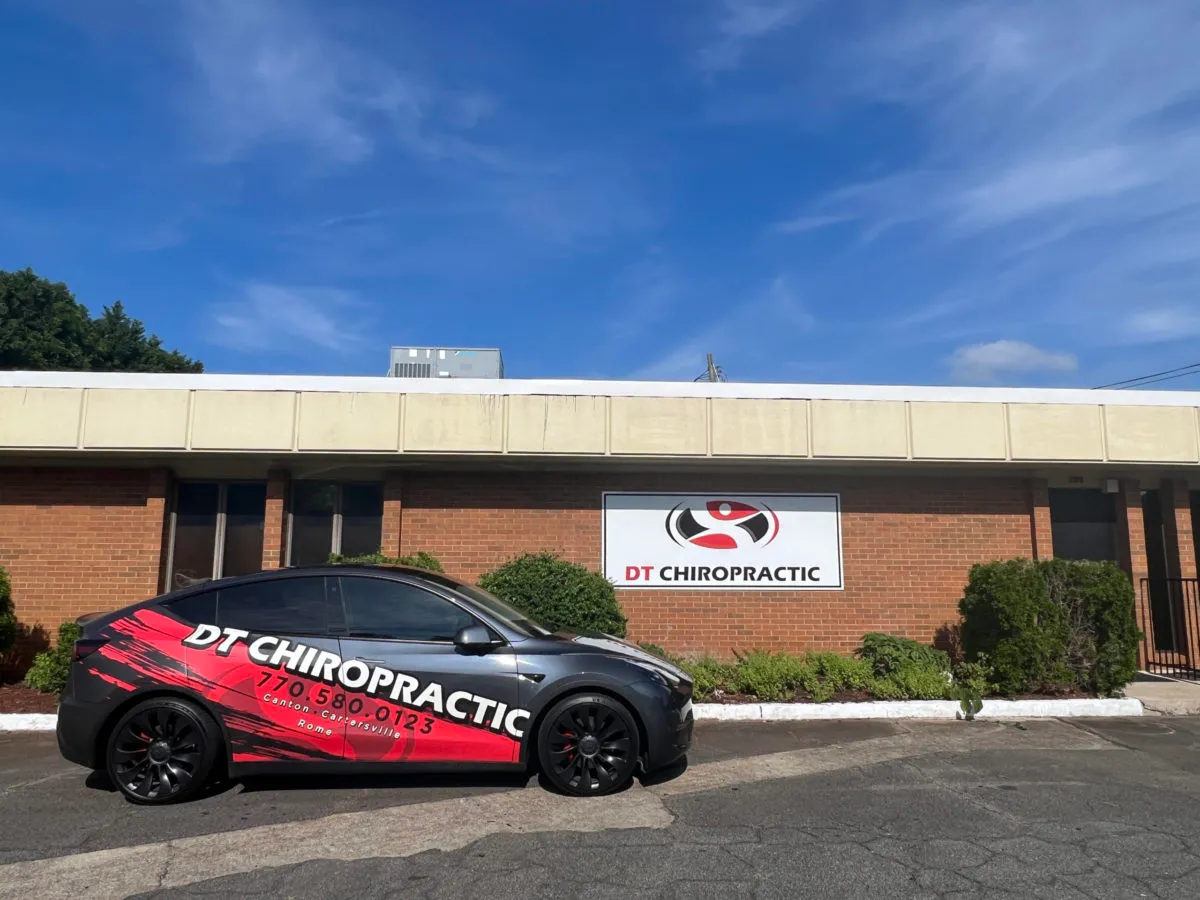
Yes, DT Chiropractic provides non-surgical care for herniated and bulging discs in Cartersville, GA, from our office at 205 Stonewall St. Care is drug-free and non-surgical, with same- or next-day appointments and a bilingual (English & Spanish) team serving Bartow County and the surrounding area.
A herniated disc rarely picks a convenient moment. For a lot of people in Bartow County it shows up after a long stretch behind the wheel on I-75 commuting to Atlanta, a weekend of yard work out toward Euharlee, or hauling gear at a tournament weekend at the LakePoint Sports complex in Emerson. One wrong twist and suddenly there's a deep ache in the low back, or a sharp line of pain firing down a leg. That radiating pain is the part that brings most folks into our office on Stonewall Street, just off historic downtown Cartersville.
We opened here in January 2022, and disc-related pain is one of the most common reasons people walk through our door. Our team is bilingual (English and Spanish), and our approach is the same for everyone: figure out what's actually happening, explain it plainly, and start with the most conservative care that makes sense. No sales, only exceptional care.
A herniated disc is when the soft cushion between two vertebrae pushes out past its normal edge and presses on or irritates a nearby nerve. Each spinal disc has a tougher outer ring and a softer gel-like center; when that center bulges or breaks through, it can crowd the nerve roots running alongside your spine. You'll hear it called a bulging disc, a slipped disc, or a "ruptured" disc, these terms overlap and aren't always used precisely, but they describe the same general problem: disc material where it shouldn't be, irritating tissue that doesn't like to be irritated.
When that pressure lands on a nerve, the pain often travels. A disc in the low back can send sciatica-type pain down the buttock and leg; a disc in the neck can cause pain, tingling, or weakness into the shoulder and arm. This is closely related to what people experience with a pinched nerve, and it's a frequent driver of stubborn lower back pain.
Most people with a herniated disc do not need surgery. The large majority of disc herniations improve with time and conservative, non-surgical care, and research consistently shows that disc material often shrinks or reabsorbs on its own over weeks to months. Surgery is generally reserved for cases that don't respond to conservative care, or where there's progressive nerve damage. That's why we, and most evidence-based guidelines, start with the least invasive options first and reserve referral for a surgical consult for the situations that genuinely call for it.
Get emergency care right away if you have loss of bladder or bowel control, numbness in the groin or "saddle" area, or rapidly worsening or severe weakness in a leg or foot (including foot drop). These can be signs of a serious condition called cauda equina syndrome, which is a medical emergency, go to the ER rather than waiting for an appointment.
Conservative care aims to take pressure off the irritated nerve, calm the inflammation around it, and restore movement so the area can heal. Depending on your exam, that may include:
For a deeper look at the condition itself, see our overview of herniated disc care. And if you want the full picture of services and the rest of our team in town, our Cartersville office page is a good starting point.
Honest answer: it depends on the disc, the nerve involved, and how long it's been going on. Many people notice meaningful relief within a few weeks of consistent conservative care, while a stubborn herniation can take longer. We won't promise a cure or a fixed timeline, anyone who guarantees a specific result with a disc isn't being straight with you. What we will do is reassess as we go, tell you honestly whether you're trending the right direction, and adjust the plan if you're not.
At your first visit we take a careful history and exam, including nerve and movement testing. Most disc problems don't need imaging right away. We order or refer for an MRI or X-ray when the exam points to something that changes the plan, significant or worsening nerve loss, red-flag findings, trauma, or a lack of progress with conservative care. If your case looks like it needs a surgical or specialist opinion, we'll say so and help you get there.
Our location near historic downtown, close to the Booth Western Art Museum and Tellus Science Museum, and an easy drive via US-41, GA-20, GA-113, or GA-61, makes us convenient for folks across the area. We regularly see patients from Emerson, White, Adairsville, Euharlee, Kingston, and Acworth, including weekend athletes from around Lake Allatoona and Red Top Mountain and the local golf community. Many of them first come in for radiating leg or arm pain and are relieved to learn how much can be done before anyone talks about surgery.
We offer same- or next-day appointments and accept most insurance. This page is general education, not medical advice; please see a clinician for an evaluation of your specific situation.
Yes, conservative chiropractic care is a well-established, non-surgical option for many herniated and bulging discs. At our Cartersville office near historic downtown we combine spinal decompression, gentle adjustments, soft-tissue work, and rehab to reduce nerve pressure and restore movement, and we refer for a surgical consult when the exam indicates it.
A telling sign of a herniated disc is pain that radiates down a leg or arm, often with numbness, tingling, or weakness, whereas a simple muscle strain usually stays local. A hands-on exam with nerve and movement testing is the most reliable way to tell the difference, which is exactly what we do at your first visit.
Usually not right away. Most disc problems can be managed based on a careful history and physical exam. We order or refer for imaging like an MRI when there are red-flag findings, significant or worsening nerve symptoms, recent trauma, or a lack of progress with conservative care.
For appropriately selected patients, spinal decompression and traction are gentle, non-surgical techniques used to reduce pressure on the disc and nerve. We screen carefully first, since it isn't right for every situation, and we tailor any decompression to what your spine tolerates.
Go to the emergency room immediately if you experience loss of bladder or bowel control, numbness in the groin or saddle area, or rapidly worsening or severe leg or foot weakness. These can signal cauda equina syndrome, a rare but serious condition that needs urgent evaluation rather than a routine appointment.
Yes. Our Cartersville team is bilingual in English and Spanish, so we can explain your diagnosis, care plan, and home exercises clearly in either language. We also offer same- or next-day appointments and accept most insurance.
Our Cartersville office is near historic downtown Cartersville, the Booth Western Art Museum, and LakePoint Sports, just off I-75. We welcome patients from across Bartow County and beyond, including:
ZIP codes served: 30120 · 30121
★★★★★ 5.0 · 300+ Google reviews
“I had never been to a chiropractor and was very skeptical, but I visited DT Chiropractic and absolutely love it.”
“They are very nice and do a great job every visit!”
“Dr. Chris is an amazing chiropractor. He has been an answered prayer since my car accident and got me feeling much better in no time.”
Same- or next-day appointments. Most insurance accepted. Se habla español.